

Food waste is a growing concern for businesses selling fresh food, ready-to-eat meals, dairy products, and beverages. For retailers, the problem is not only environmental. Unsold products also mean lost inventory, wasted storage space, and lower profit margins. Traditional retail often relies on manual inventory checks and fixed replenishment schedules. This can make it difficult to respond quickly when sales change.
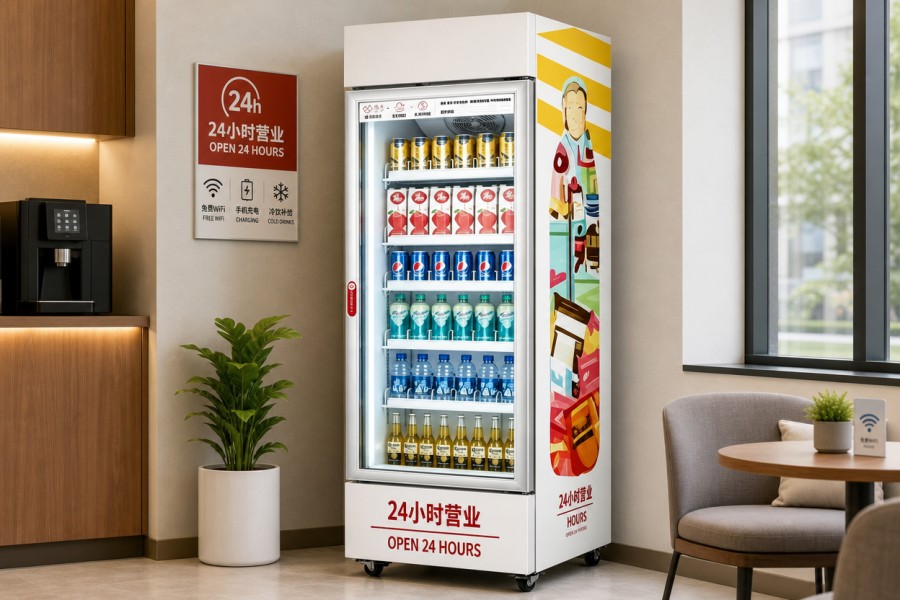
A smart refrigerated vending machine offers a different approach. By combining refrigerated storage, automated sales, digital payment, and intelligent management, businesses can gain better visibility into product sales and inventory. This makes it easier to manage fresh products and reduce unnecessary waste.
Why Does Food Waste Happen in Fresh Food Retail?
Food waste usually comes from several common problems. Products may be stocked based on estimated demand rather than actual sales. Some locations may sell certain products quickly, while others may have slower turnover. Without timely sales information, operators can easily overstock. Temperature management is another factor. Fresh food and beverages need stable storage conditions throughout the day. Poor temperature control can affect product quality and shorten shelf life.
For businesses operating multiple retail locations, these challenges become even more difficult to manage manually. This is where refrigerated vending machines can provide a more controlled retail environment.

How Smart Refrigerated Vending Machines Help Reduce Waste
1. Better Visibility into Product Sales
A major advantage of a smart vending machine is access to sales data.
Instead of relying only on periodic manual checks, operators can monitor which products are selling and which are moving slowly.
For example, if sandwiches sell quickly in one location but remain in stock at another, the operator can adjust replenishment accordingly.
This allows businesses to make stocking decisions based on actual demand rather than assumptions.
2. More Efficient Inventory Management
Inventory management becomes particularly important when selling products with a limited shelf life.
A refrigerated self-service vending machine can be connected to a digital management platform, allowing operators to track sales and inventory more efficiently.
Businesses can use this information to identify:
- Fast-moving products
- Slow-moving products
- Low-stock items
- Sales patterns
- Replenishment needs
With better inventory visibility, operators can avoid placing too much stock in locations where demand is limited.
3. Stable Refrigeration Helps Protect Product Quality
For fresh food and beverages, refrigeration is not simply an added feature. It is an important part of product management. A commercial refrigerated vending machine is designed to maintain a controlled temperature environment while products are stored inside the machine. Stable refrigeration can help businesses maintain product quality and reduce losses caused by unsuitable storage conditions. For products such as fresh meals, dairy products, sandwiches, fruit, and chilled beverages, reliable temperature control is particularly important.
4. Data Can Improve Replenishment Decisions
One of the biggest opportunities offered by smart retail equipment is the ability to connect sales data with inventory management.
Instead of asking, “How many products should we send to this location?”, operators can look at actual sales performance.
For example:
Location A sells 80% of its sandwiches within two days, while Location B sells only 40%.
Rather than sending the same quantity to both locations, the operator can adjust the replenishment plan according to local demand.
This simple change can reduce overstocking and improve inventory turnover.

Remote Management Makes Multi-Location Operations Easier
For businesses operating several vending machines, manually checking every machine can be time-consuming.
An IoT-enabled vending machine can connect equipment with a cloud-based management system. Operators can access operational information remotely and make adjustments without visiting every location.
This can be useful for:
- Office buildings
- Schools
- Hospitals
- Hotels
- Transportation hubs
- Commercial buildings
- Retail stores
Remote management also allows operators to identify potential problems earlier, helping reduce unnecessary downtime and product loss.
Choose Products Based on Local Demand
Technology alone cannot eliminate food waste. Product selection still matters.
Businesses should analyze purchasing patterns before deciding what to place in a fresh food vending machine.
For example, an office location may have stronger demand for:
- Sandwiches
- Salads
- Ready-to-eat meals
- Yogurt
- Coffee and chilled beverages
A transportation location may have different preferences. By matching products with local demand, businesses can improve sales turnover and reduce the amount of unsold inventory.

Why Smart Refrigerated Vending Machines Make Sense for Modern Retail
The value of a smart refrigerated vending machine goes beyond automated sales.
It combines several functions in one retail terminal:
Refrigeration + Self-Service Sales + Digital Payment + Inventory Data + IoT Management
This makes the vending machine more than a standalone piece of equipment. It can become part of a connected retail system.
For businesses selling fresh and chilled products, this approach can help reduce unnecessary inventory, improve operational efficiency, and provide customers with convenient access to food and beverages throughout the day.
WSS: Intelligent Solutions for Smart Retail
WSS is a provider of intelligent retail solutions and equipment, focusing on comprehensive system solutions for the new retail industry. Its product portfolio includes vending machines, intelligent pharmaceutical vending systems, self-service car washers, and other smart retail terminals. By integrating intelligent hardware, software, and IoT technologies, WSS helps businesses build more connected and efficient retail operations.
For businesses using commercial refrigerated vending machines, this integrated approach can support sales management, equipment monitoring, and digital retail operations. Instead of managing each machine as an independent terminal, businesses can connect equipment with cloud-based systems and build a more efficient IoT-enabled retail network.
Final Thoughts:
Reducing food waste requires more than simply throwing away fewer products. Businesses need better control over inventory, refrigeration, sales data, and replenishment. A smart refrigerated vending machine can help by providing a controlled storage environment, automated sales, and better access to operational data.
When combined with appropriate product selection and demand-based replenishment, these capabilities can help businesses reduce overstocking, improve product turnover, and operate fresh food retail more efficiently. For companies looking to expand automated food and beverage sales, WSS smart retail solutions provide a way to connect intelligent hardware with cloud-based management and IoT technologies—creating a more flexible and data-driven approach to modern retail.