

Qualche anno fa, lavare un'auto di solito significava consegnare il veicolo a qualcun altro e aspettare. Il processo è stato semplice: entrare, let the staff handle the cleaning, and drive out. Self-service car washing changes that relationship. The customer is no longer just receiving a service; they are actually using the equipment to complete it.
That sounds like a small difference, but it changes quite a lot. The way people start a wash, choose a cleaning function, make a payment, and move around the vehicle all become part of the service. For operators, the machine also has to do more than clean a car. It needs to be easy enough for a first-time user to understand and reliable enough to keep working with little day-to-day assistance.
This is where a well-designed self-service car wash machine makes a difference.
A Good Self-Service Experience Starts With Simplicity
The first challenge is usually not the washing itself. It is getting the customer started. When an employee is present, even a complicated washing process can be explained in a few seconds. At an unattended location, the equipment has to do that job. Customers should be able to look at the machine and understand what to do without standing there trying to figure out a complicated control panel.
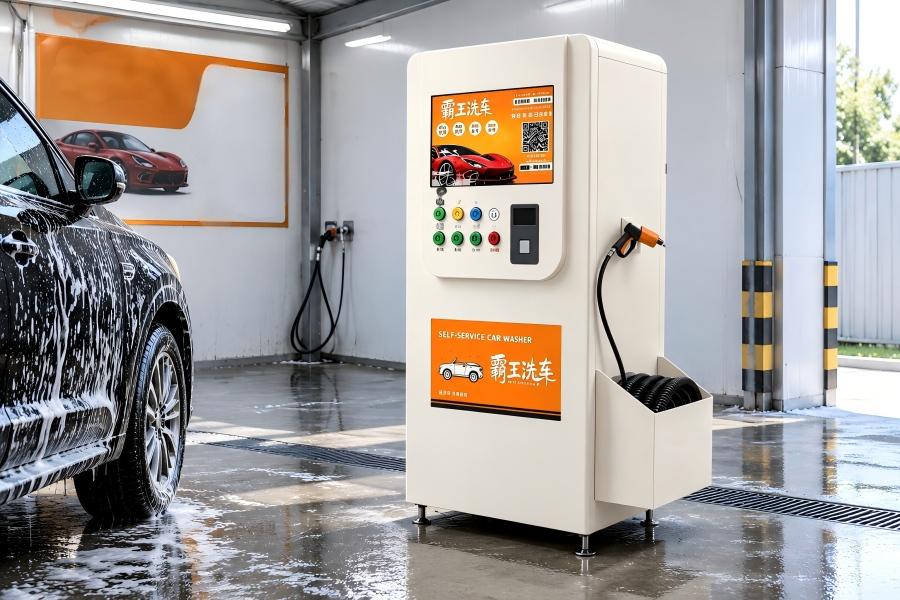
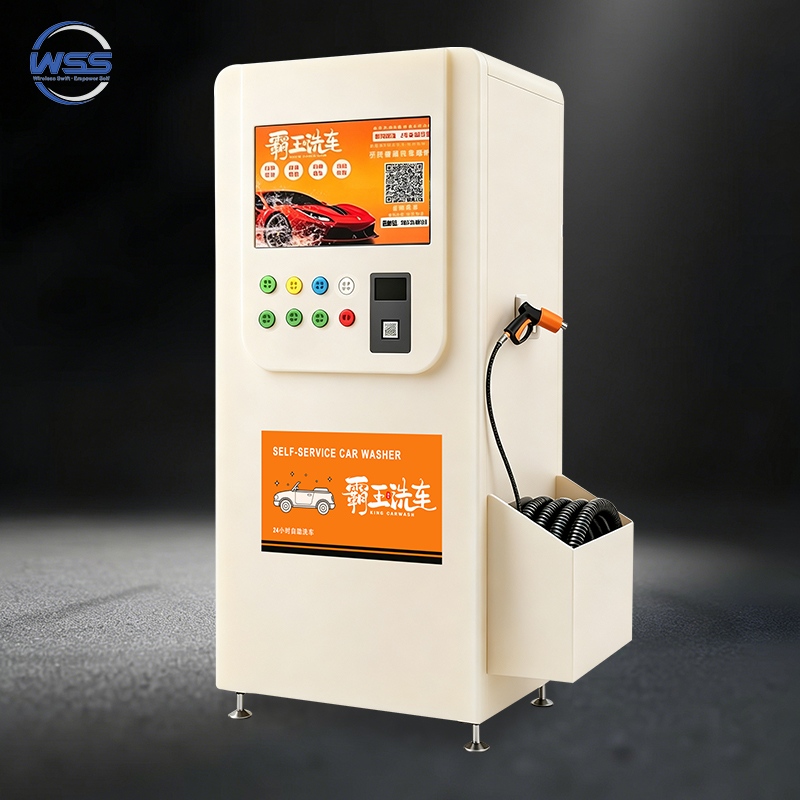
The 21-inch HD display on WSS equipment is designed with this in mind. It can be used to show operating instructions, service information, advertisements, or promotions. For the customer, the screen provides guidance; for the operator, it can also become useful advertising space. That combination is practical because the screen is doing more than one job.
Payment Should Not Get in the Way
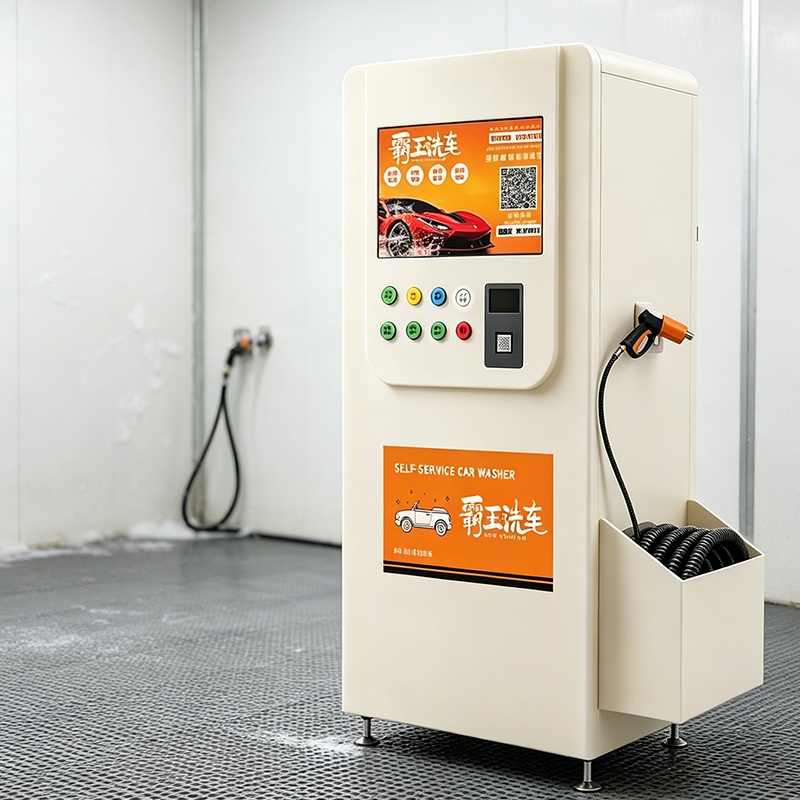
Nobody goes to a car wash because they want to spend time working out how to pay. Cashless payment has therefore become an important part of the modern self-service car wash experience. With the WSS smart full-network connected control system, users can access the service through QR code scanning and complete payments or recharges from their mobile devices. VIP membership can also be incorporated into the system.
For a customer who already uses mobile payments every day, this feels much more natural than searching for coins or dealing with a separate payment process.
It also gives operators more flexibility. A self-service location can be managed around direct payments, repeat customers, or membership programs instead of relying entirely on one payment method.
Customers Want Control Over the Cleaning Process
Not every car needs exactly the same wash.
Sometimes the outside of the vehicle only needs a quick rinse. Sometimes there is more dirt around the wheels or lower body. After washing the exterior, a customer may also want to vacuum the interior.
This is one reason a smart self-service car wash machine should offer more than one basic washing function.
WSS combines high-pressure washing, foam spraying, vacuum cleaning, and manual washing in one unit. Customers can choose the functions they actually need instead of paying for a fixed process that may not suit the condition of their vehicle.
For self-service, that flexibility matters. The customer is doing the work, so having control over the process is part of the value.
The Technology Still Has to Deliver a Proper Wash
Smart features are useful, but they cannot compensate for poor cleaning performance. If the water pressure is weak or unstable, a large display and convenient payment system will not make much difference to the person standing beside the car. The WSS machine uses a 2.2KW high-pressure water pump together with a double-layer steel wire hose to provide stable water pressure during cleaning. This is the part of the system that customers may not notice until something goes wrong—and that is exactly why it matters. Good equipment tends to disappear into the background. The customer selects a function, uses it, and gets on with washing the car.
Foam Should Be Easy to Use
Foam is another part of the process where simplicity matters. Customers generally do not want to think about the correct foam ratio while they are trying to clean their car. WSS uses automatic foam proportioning, which helps keep the foam application more consistent without requiring the user to make manual adjustments. It is a small feature, but it removes one more thing the customer has to think about.
The same principle applies to voice broadcast guidance. Not everyone will read every instruction on the screen, especially when they are moving around the vehicle. Voice prompts provide another way to guide the user through the operation. The goal is not to make the machine sound more “intelligent.” It is simply to make the process easier for someone who may be using the equipment for the first time.
Outdoor Equipment Has to Be Built for Real Use
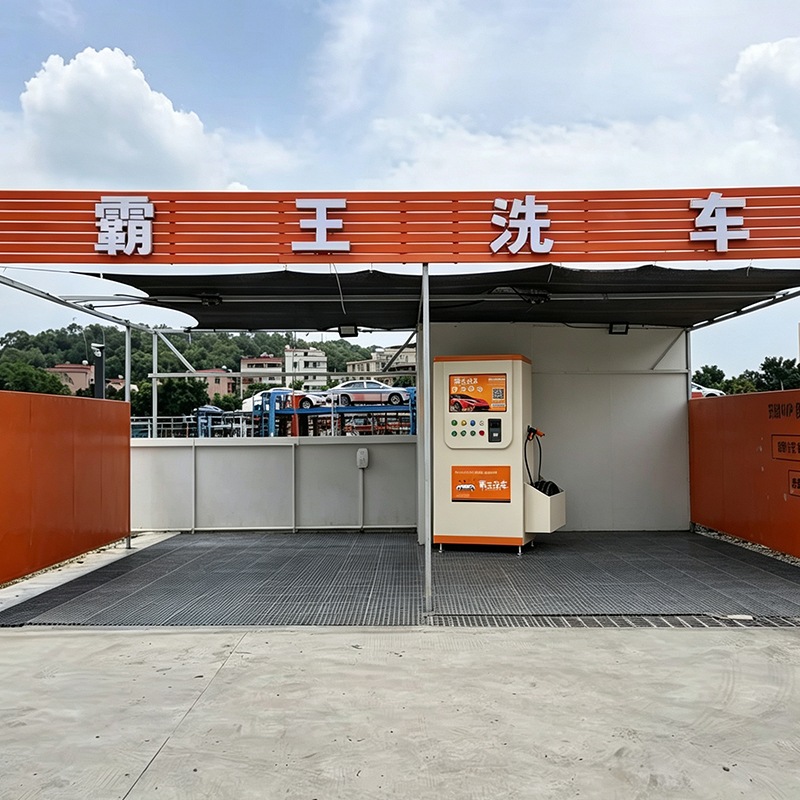
A commercial self-service machine is rarely sitting in a quiet indoor environment. It may be installed in a parking area, service location, residential community, or other public space where it is exposed to weather and used repeatedly throughout the day. The physical construction therefore matters just as much as the software.
WSS uses a galvanized steel structure with baking paint to provide a durable enclosure for commercial and public applications. This type of construction is important for equipment that needs to remain in service for long periods with regular exposure to outdoor conditions. There is also a customer-facing benefit. A machine that looks solid, clean, and well maintained gives people more confidence when there is no employee nearby.
What Changes for the Operator?
The customer sees the screen, payment system, hose, foam, and vacuum. The operator sees something different.
They are thinking about uptime, manutenzione, payment records, customer usage, replenishment, and whether the equipment can run without someone standing beside it all day.
This is where a smart car wash system becomes more than a collection of washing functions.
The network-connected control system allows the machine to participate in a more connected operating model. For businesses managing self-service locations, that can be more useful than simply adding another feature to the front panel.
The purpose of the technology is ultimately quite practical: make the machine easier to operate while reducing the amount of routine intervention required.
Self-Service Does Not Mean the Customer Is Left Alone
There is sometimes a misconception that self-service means removing the human element completely. In pratica, the better approach is to make the equipment take care of the repetitive parts of the service while giving the customer clear guidance when they need it.
The screen explains the process. QR access and mobile payment remove unnecessary transaction steps. Voice guidance helps with operation. Automatic foam proportioning reduces manual adjustment. Multiple washing functions give the customer room to decide how much cleaning is needed. The customer is still in control, but they do not have to figure everything out by themselves. That is an important distinction when designing an unattended car wash.
The Machine Needs to Fit the Business, Not Just the Car
For a business considering a self-service car wash project, choosing equipment is not simply a matter of comparing specifications.
The location matters. So does the expected customer flow, the available space, the type of users, operating hours, payment preferences, and the level of staff support available at the site.
A machine installed at a residential community may be used differently from one at a commercial car wash location. One site may have many short visits, while another may have customers spending more time on a thorough cleaning.
The equipment needs to make sense within that particular operating environment.
This is why commercial car wash equipment should be evaluated from both sides: how easy it is for customers to use and how practical it is for the business to manage.
How WSS Approaches Self-Service Car Washing
WSS focuses on combining the basic requirements of vehicle cleaning with the features needed for modern self-service operation.
Its smart self-service car wash machine brings high-pressure washing, foam spraying, vacuum cleaning, and manual washing together in one unit. The 21-inch HD display provides space for instructions and commercial content, while the connected control system supports QR access, mobile payment, recharge, and VIP membership.
On the equipment side, the 2.2KW high-pressure water pump and double-layer steel wire hose are built around regular cleaning use. Automatic foam proportioning and voice guidance help simplify the operation, while the galvanized steel structure with baking paint is intended for commercial and public environments.
None of these features is particularly useful on its own. What matters is how they work together during an actual wash.
The Customer Experience Is Becoming Part of the Equipment
The biggest change in self-service car washing is perhaps not the move from manual washing to automated equipment. It is the fact that the machine itself has become part of the service.
A customer interacts with the screen, chooses a function, pays through a phone, handles the washing equipment, and finishes the process independently. If those steps feel confusing, the machine becomes a problem. If they feel natural, the technology almost disappears from the experience.
That is the direction modern self-service car wash machines are moving toward.
The aim is not to add as many smart functions as possible. It is to use the right technology where it actually helps—making payment easier, instructions clearer, washing more flexible, and daily operation more manageable.
For WSS, that means treating the machine as part of the complete car wash experience rather than simply a piece of washing equipment.