


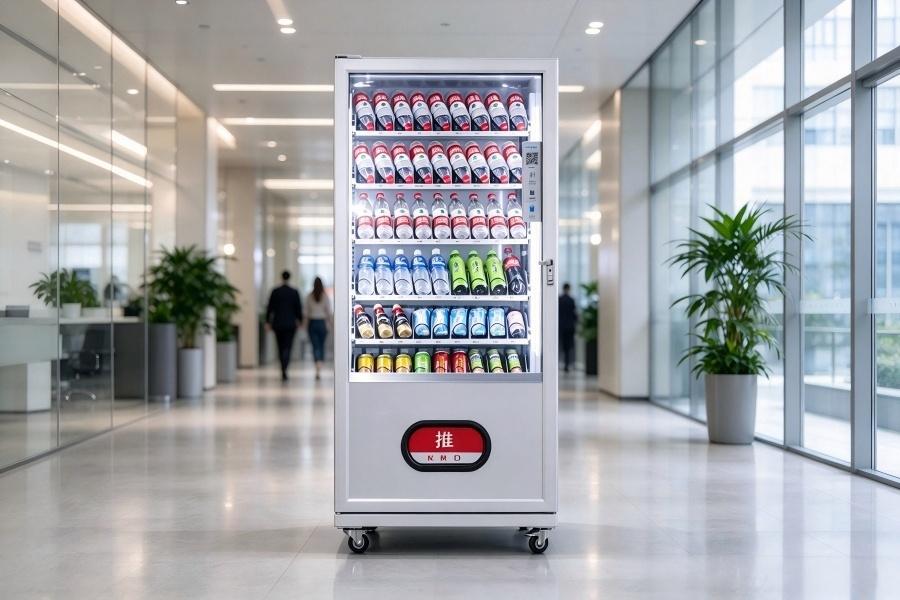
Selling fresh food through a vending machine requires more planning than selling packaged snacks or bottled drinks. Products need to stay at the right temperature, fit the dispensing system, and remain easy to access for customers. At the same time, operators need a reliable way to manage payments, track inventory, and keep machines running with minimal on-site supervision.
This is where a smart refrigerated vending machine can make a difference. By combining refrigeration with automated sales and remote management, it allows businesses to offer chilled beverages, packaged meals, dairy products, and other suitable food items in locations where a traditional staffed store may not be practical.
For businesses considering this type of equipment, the important question is not simply which machine has the most features. It is which configuration best fits the products, emplacement, and day-to-day demands of the operation.
WSS offers refrigerated vending machines designed for beverages, fresh food, and packaged snacks, with adjustable cooling, flexible shelf layouts, cashless payment options, and intelligent management functions. This guide explains what buyers should look for before choosing a machine and how to assess whether it is suitable for their business.

What Makes a Refrigerated Vending Machine Different?
A conventional vending machine is generally designed for products that can be stored at ambient temperatures. A refrigerated vending machine adds a cooling system, making it suitable for products that need chilled storage.
That difference opens up more possibilities for unattended retail. Instead of limiting the product range to chips, candy, and shelf-stable drinks, operators can consider bottled beverages, yogurt, sandwiches, salads, and packaged ready-to-eat meals, provided the machine can maintain the storage conditions each product requires.
A smart refrigerated vending machine adds another layer of functionality. Depending on its configuration, the system can provide sales records, inventory information, machine-status monitoring, and integration with payment or vending management platforms.
These features are especially useful for businesses operating machines across several locations. Rather than relying entirely on scheduled visits, operators can use available sales and inventory data to plan replenishment and identify potential issues earlier.
For WSS customers, the goal is to combine suitable refrigeration with practical vending functions in one system, making it easier to adapt the equipment to different products and retail environments.
1. Start With the Products You Want to Sell
Before comparing machine specifications, define your product range. This is one of the most important steps because the products you intend to sell will determine the refrigeration requirements, shelf layout, and dispensing configuration.
Beverages and bottled drinks
Water, juice, soft drinks, and other packaged beverages are common applications for refrigerated vending machines. For this product category, buyers should pay particular attention to bottle height, diamètre, poids, and the dimensions of the dispensing channels.
A machine may have a large internal capacity on paper, but that does not necessarily mean every bottle size will fit efficiently. Asking the supplier to assess your actual packaging dimensions can help avoid wasted space and dispensing problems.
Fresh and ready-to-eat food
Sandwiches, salads, wraps, and packaged meals can attract customers who want a quick alternative to a cafeteria or convenience store. Cependant, these products introduce additional requirements.
Fresh food may have stricter temperature and shelf-life requirements than bottled drinks. Packaging must also be compatible with the machine’s shelves and dispensing method. Before purchasing, confirm the storage conditions recommended by the food manufacturer and check that the proposed machine configuration can maintain them.
A refrigerated vending machine is only one part of a safe food-selling operation. Stock rotation, expiry-date checks, replenishment procedures, and cleaning remain the operator’s responsibility.
Dairy products and mixed assortments
Yogurt, milk-based drinks, cheese, and other chilled packaged products may also be suitable, depending on their storage requirements.
If you plan to sell both beverages and food, look for a machine that offers enough flexibility to accommodate different packaging formats. Adjustable shelves and channels can make it easier to update the product assortment as demand changes.

2. Check the Refrigeration System Carefully
Cooling performance deserves particular attention when selecting a refrigerated vending machine for fresh food. The right temperature depends on the products being sold, their packaging, and the relevant food safety requirements.
WSS refrigerated vending machines feature a modular refrigeration system with adjustable temperatures down to -5°C. This gives operators flexibility when configuring the equipment for different applications.
Cependant, the lowest available setting should not be the only specification you consider. Ask the supplier about the usable temperature range, temperature stability, expected ambient operating conditions, and available monitoring functions. If you intend to sell perishable food, make sure the selected configuration is suitable for the required storage temperature throughout normal operation.
It is also worth considering the environment in which the machine will be installed. A machine placed in an air-conditioned office may face different cooling demands from one installed in a warm, high-traffic commercial area.
Before making a decision, clarify:
- Whether the machine can maintain the required temperature under your expected operating conditions
- How operators can check the internal temperature
- Whether temperature alarms or remote alerts are available
- What routine refrigeration maintenance is required
- How the system should be handled following a power interruption or cooling failure
These questions are more useful than comparing temperature specifications alone because they address how the equipment will perform in actual use.
3. Make Sure the Shelf Layout Fits Your Product Range
A good smart refrigerated vending machine for fresh food should be configured around the products it will sell, rather than forcing the operator to work around a fixed layout.
WSS machines feature adjustable shelves and flexible product channels. This allows the interior to be arranged according to different product sizes and packaging formats, helping operators make better use of the available space.
Par exemple, a machine selling tall beverage bottles will need a different layout from one selling shallow food trays or packaged sandwiches. If the product range changes frequently, a flexible interior can also make seasonal adjustments and assortment updates easier.
When reviewing capacity, ask for more than a headline figure. Share photographs or dimensions of the products you plan to stock and request a proposed loading configuration. It is also useful to understand how easily shelves can be adjusted and whether changing the layout requires additional components.
The objective is to balance product variety with practical stocking and dispensing. Filling every available space is not necessarily the best approach if it makes products difficult to load, retrieve, or replenish.
4. Look Beyond the Display When Assessing Security
A vending machine often operates without staff nearby, so cabinet security and product visibility both matter.
WSS refrigerated vending machines feature a large transparent glass display that allows customers to see the available products before making a selection. Clear presentation can make the shopping experience more convenient and may encourage impulse purchases, particularly in locations where customers make quick decisions.
The cabinet also incorporates explosion-proof glass and multiple anti-theft mechanisms to support secure operation.
Pour les acheteurs, it is worth checking how the cabinet is secured, how the door opens for replenishment, and whether routine cleaning can be carried out without unnecessary difficulty. The machine should be practical for staff to maintain while remaining secure during customer use.
Installation also plays a role. A visible location with suitable lighting and convenient access may improve product presentation, while the surrounding environment should be considered when planning security and maintenance.

5. Payment Compatibility Matters, Especially for International Buyers
Payment convenience can have a direct effect on the customer experience. If a machine does not support the payment methods customers prefer, even a well-stocked product range may be less convenient to purchase.
WSS refrigerated vending machines support multiple cashless payment options. Depending on the selected configuration and target market, operators can evaluate QR code payments, mobile payment solutions, contactless cards, or other supported methods.
WSS machines are designed in compliance with international MDB and DEX standards. MDB is commonly used for communication between vending machines and payment peripherals, while DEX supports the exchange of vending data. These standards can help with integration, but they do not automatically guarantee compatibility with every payment terminal or management platform.
For overseas projects, buyers should confirm the details before ordering. Check which payment devices are supported, whether additional hardware is required, and whether the chosen payment provider operates in the intended country or region. It is also useful to clarify transaction fees, software requirements, and who will handle installation and configuration.
A supplier who can clearly explain these integration details can help reduce uncertainty during deployment.
6. Use Smart Management to Make Daily Operations Easier
The benefit of a smart vending machine is not limited to automated sales. Its management functions can also help operators understand what is happening inside the business.
WSS refrigerated vending machines feature an intelligent control system that allows operators to monitor sales data, inventory levels, and machine status in real time.
This information can support several practical decisions. Sales records can help identify popular products. Inventory data can help determine when a machine needs replenishment. Machine-status information can make it easier to spot operational issues and arrange service when necessary.
For operators managing multiple machines, remote monitoring may reduce the need to visit every location simply to check stock or machine condition. It can also make replenishment planning more responsive to actual demand.
Before purchasing, ask the supplier which functions are included in the standard system and which depend on optional software or connectivity. Confirm whether the platform supports the reports, alerts, and remote access your team needs.
The most useful management system is one that fits your operating process and provides information you can act on, rather than one that simply offers a long list of features.
7. Where Do Refrigerated Vending Machines Work Best?
The right location depends on customer traffic, the type of products being sold, and how frequently the machine can be replenished.
Office buildings and business parks are suitable for chilled drinks, packaged snacks, and convenient meal options. These locations may have predictable weekday demand, making it easier to plan stock levels and replenishment schedules.
Universities and educational facilities can provide demand for beverages and approved packaged foods throughout the day. Operators should check institutional policies and any restrictions on the types of products that can be sold.
Hospitals and healthcare facilities may benefit from access to refreshments outside normal cafeteria hours. Product selection, installation locations, and operating procedures should be agreed with the facility and comply with its requirements.
Gyms and fitness centers are potential locations for water, sports drinks, and suitable chilled products. Shelf dimensions and product packaging are important when planning the assortment.
Transport hubs and commercial buildings can attract customers who value speed and convenience. In these locations, machine visibility, payment options, access for replenishment, and security all deserve attention.
Before installing a machine, estimate the likely customer base, peak purchasing times, available floor space, electricity supply, and access for restocking. A strong location and a well-matched product assortment are just as important as the equipment itself.
8. Calculate the Operating Costs Before You Buy
The initial purchase price is only one part of the cost of running a refrigerated vending machine. Because the equipment includes a refrigeration system, operating expenses deserve particular attention.
When comparing machines, consider electricity consumption, payment processing fees, connectivité, cleaning, entretien, spare parts, and replenishment labor. For fresh food, unsold or expired stock can also affect profitability.
A useful starting point is to estimate expected sales and gross margin, then subtract the recurring costs associated with the machine and its location. The result will not be exact, but it can help you compare different operating scenarios before committing to an investment.
Ask suppliers for available power consumption data under specified test conditions. Actual energy use can vary with ambient temperature, door-opening frequency, product loading, and operating settings, so avoid relying on a single figure without understanding how it was measured.
It is also worth reviewing warranty coverage, technical support, maintenance requirements, and spare parts availability. A machine that is easier to service may help reduce disruption over its operating life.
9. Why Consider WSS for Your Refrigerated Vending Machine Project?
Choosing a supplier involves more than selecting a cabinet with the right dimensions. Buyers need to understand the machine’s capabilities, confirm system compatibility, and ensure that the proposed configuration fits their intended application.
WSS refrigerated vending machines bring together several features designed for unattended retail:
- Adjustable refrigeration: A modular system with adjustable temperatures down to -5°C for suitable product applications.
- Product visibility: A large transparent glass display that makes the available assortment easy to see.
- Cabinet security: Explosion-proof glass and multiple anti-theft mechanisms.
- Intelligent monitoring: Real-time access to sales data, inventory levels, and machine status.
- Cashless payments: Support for multiple payment options, subject to the selected configuration.
- Flexible product layout: Adjustable shelves and channels for different packaging sizes.
- System integration: MDB and DEX standards to support compatibility with relevant vending systems and management platforms.
These features can provide a useful starting point for businesses planning to sell chilled beverages and packaged food. The best configuration will depend on the product range, operating environment, payment requirements, and management setup.
When discussing a project with WSS, prepare your product dimensions, target market, preferred payment methods, environnement d'installation, and expected operating requirements. This makes it easier to assess which configuration is appropriate and which options may be necessary.
Foire aux questions
Can a refrigerated vending machine sell fresh food?
Oui. A refrigerated vending machine can sell suitable packaged fresh food when the selected configuration can maintain the required storage conditions. Operators must also follow food safety rules, stock rotation procedures, expiry-date checks, and appropriate cleaning practices.
What temperature can a WSS refrigerated vending machine reach?
WSS refrigerated vending machines feature adjustable temperatures down to -5°C. Buyers should confirm the usable operating range and temperature stability of the selected model, as well as its suitability for the intended products.
Can one machine sell both beverages and food?
Potentially, yes. The suitability depends on product dimensions, shelf configuration, dispensing design, and storage temperature requirements. Providing the supplier with actual product packaging measurements is the best way to assess a mixed assortment.
Do WSS machines support cashless payments?
WSS machines support multiple cashless payment options. The available methods depend on the payment hardware, software configuration, and local service providers. Buyers should confirm compatibility with their preferred payment solution before ordering.
What are MDB and DEX standards?
MDB is a communication standard commonly used to connect vending machines with payment peripherals. DEX supports vending data exchange, such as sales and accounting information. Buyers should verify the interfaces and integrations supported by the complete machine configuration.
What should I check before purchasing a smart refrigerated vending machine?
Start with the product range and required storage conditions. Then assess the machine’s temperature performance, capacity, shelf flexibility, payment compatibility, management functions, security, energy use, garantie, and after-sales support.
Pensées finales
A refrigerated vending machine can help businesses offer chilled beverages and packaged fresh food in locations where convenience and flexible access matter. Cependant, successful operation depends on choosing equipment that matches the products and the way the business will be run.
Before making a purchase, pay close attention to refrigeration performance, product fit, payment integration, gestion à distance, and the total cost of ownership. These practical considerations will help you make a more informed decision than comparing headline specifications alone.
WSS provides refrigerated vending machine solutions with adjustable cooling, flexible product layouts, cashless payment support, and intelligent management features. If you are planning a new vending project or expanding an existing network, contact WSS to discuss your product range, installation requirements, and preferred machine configuration.